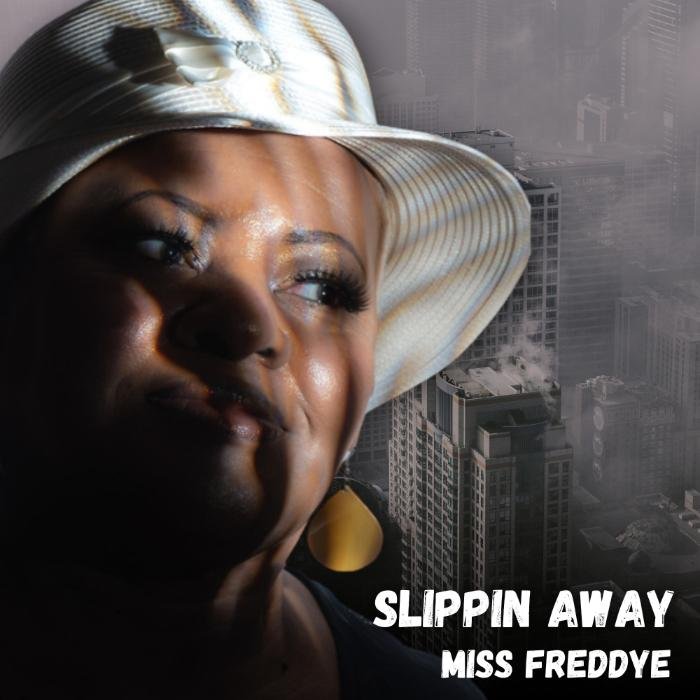
Miss Freddye’s Slippin’ Away and the Persistence of the Blues Voice
Tyler Grant
Mar 28, 2026
Miss Freddye’sSlippin’ Away occupies a space that I’ve often identified as central to the blues tradition: the meeting point between personal testimony and communal form. It is not an ambitious record in terms of structure or innovation, but it is deeply rooted in the expressive language that has sustained blues music for over a century. In that sense, its significance lies less in what it attempts to change than in what it preserves.
Freddye Stover, known professionally as Miss Freddye, emerges from a regional circuit—Pittsburgh and the surrounding areas—that has long supported working blues musicians outside the more widely documented Southern and urban centers. Like many artists shaped by church and community, her vocal approach reflects a synthesis of gospel phrasing and secular blues storytelling. This dual inheritance is audible throughout Slippin’ Away, where the phrasing suggests both lament and endurance.
The song itself, written by Mike Lyzenga, follows a familiar thematic trajectory: the gradual dissolution of intimacy. The lyric avoids specificity, relying instead on the archetypal imagery that has long defined blues poetry—loss rendered as something tactile, slipping beyond one’s grasp. This reliance on convention is not a limitation so much as a framework within which interpretation becomes paramount. As I’ve observed in my writing, the blues often derives its power not from novelty, but from the individuality of its performance.
That individuality is evident in Freddye’s vocal delivery. She resists the ornamental excess that characterizes some contemporary blues recordings, opting instead for a measured, almost conversational tone. There is a sense that the song unfolds in real time, with each phrase shaped by breath and feeling rather than predetermined effect. This approach aligns with earlier vocal traditions, where timing and inflection carried as much weight as melody.
The instrumental arrangement supports this aesthetic. Mike Huston’s guitar work is restrained, drawing on a vocabulary of bends and sustained notes that recall postwar electric blues without directly imitating it. Jeff Conner’s keyboard contributions introduce a subtle gospel coloration, reinforcing the emotional undercurrent without overtaking the performance. The rhythm section—Greg Sejko on bass and Bob Dicola on drums—maintains a steady, unobtrusive pulse, emphasizing continuity over dynamic variation.
Production, handled by Freddye herself, reflects a conscious decision to foreground the vocal narrative. The recording avoids excessive layering, allowing space within the mix for the interaction between voice and instrument. This clarity recalls earlier recording practices, where the goal was not to construct a sonic environment but to document a performance.
What Slippin’ Away ultimately reveals is the continued viability of the blues as a form of personal expression. In an era when the genre is frequently reframed through commercial or hybridized contexts, Freddye’s approach remains grounded in its original function: to articulate emotional experience in a direct and unembellished manner. The song does not seek to expand the boundaries of the blues, but it does affirm its enduring capacity to convey meaning.
In this respect, Slippin’ Away stands as a modest but compelling example of the tradition’s persistence, an instance of the blues not as revival, but as ongoing practice.
Senior editor and business journalist covering entrepreneurship, strategy, and the ideas shaping modern business. Previously contributed to regional business publications across the United States.