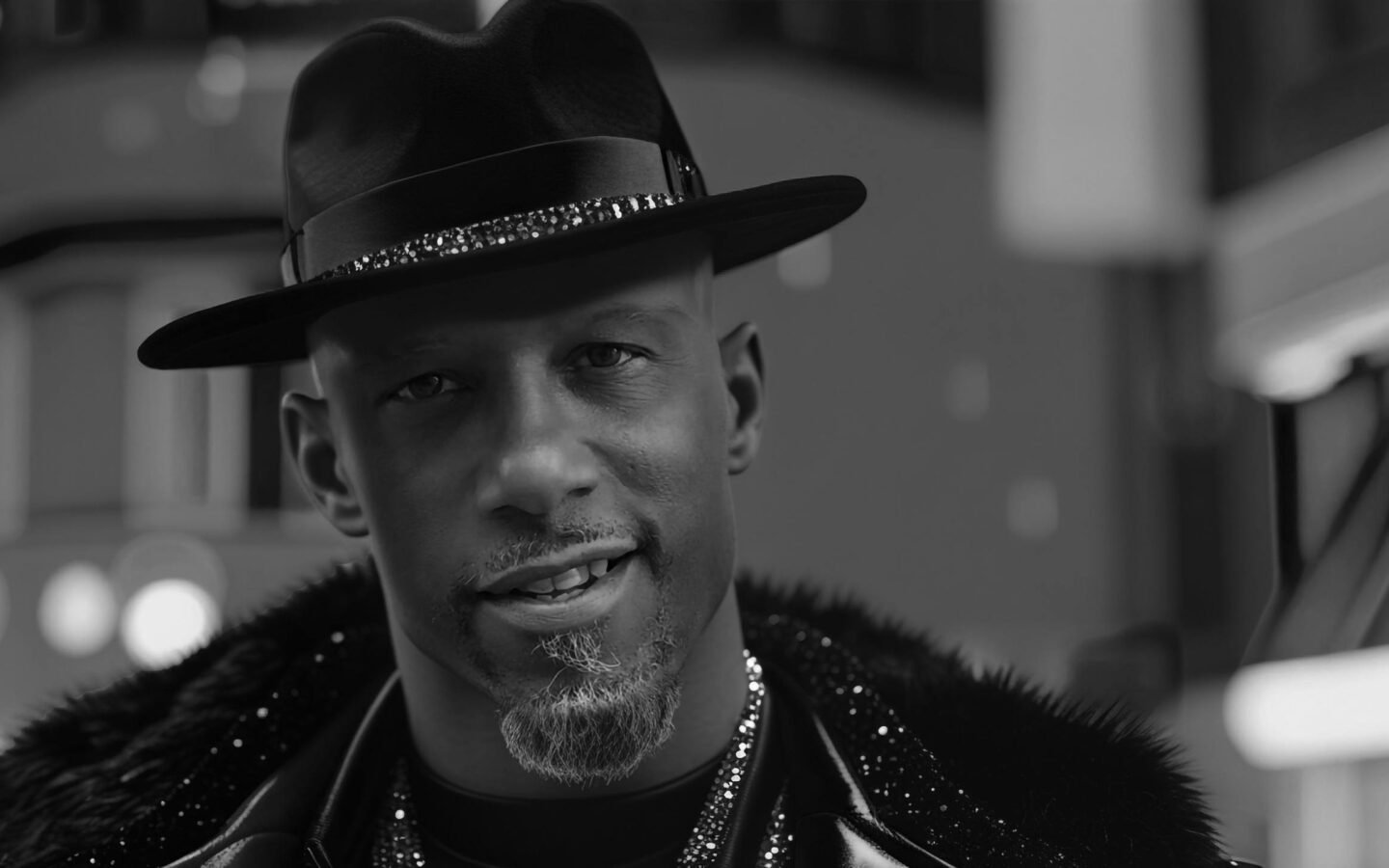

For more than 30 years, DPB has been building a career defined not by trends, but by endurance. In a music industry that often rewards fleeting moments over long-term purpose, DPB has remained a consistent voice in Christian hip-hop, blending gospel-rooted conviction with the rhythms and storytelling traditions of rap music. His latest chapter — the album Undefeated and its standout single “Back in the Day” — feels less like a comeback than the continuation of a mission he’s been pursuing for decades.
Long before Christian hip-hop gained wider commercial visibility, DPB was already helping push the genre forward. His journey began singing with The Brooks Family before expanding into rap and performance, including appearances alongside mainstream artists like Salt-N-Pepa and work with the Grammy- and Dove-nominated Christian group D.O.C. Over the years, he has shared stages with major Christian artists including TobyMac and Kirk Franklin while carving out his own lane between ministry and music.
That longevity matters. Christian hip-hop has evolved dramatically over the last three decades, growing from a niche subculture into a recognized force within gospel and mainstream music. Through all of those shifts, DPB has remained committed to making music rooted in encouragement, testimony, and faith without abandoning hip-hop’s emphasis on rhythm, storytelling, and personal truth.
His latest album, Undefeated, released in March 2026, functions as what he has called a “sonic autobiography.” Across 15 tracks, the project traces his experiences through gospel, worship, old-school funk, inspirational pop, and hip-hop. Songs like “God Mode” and “Power in the Name Of (Jesus Anthem)” carry revival-like energy, while tracks such as “Consume Me” reveal a quieter, worship-centered side of the artist. Meanwhile, “Let It Go” tackles emotional struggles including bitterness, addiction, and mental health with unusual directness.
But it’s “Back in the Day” that has emerged as one of the album’s emotional centerpieces.
The single is a nostalgic reflection on family, faith, and the foundations that shaped DPB’s life. Over a warm, groove-heavy beat, he recalls a childhood rooted in prayer, church rehearsals, neighborhood block parties, and the influence of a praying mother and grandmother. Rather than simply longing for the past, the song asks listeners to reconsider the values that once held communities together.
Part of what makes “Back in the Day” resonate is its vivid specificity. DPB references his upbringing in Nyack, New York, memories of DJs spinning music at neighborhood gatherings, children playing outside, and cultural touchstones like Michael Jackson and Lauryn Hill. Those details ground the song in lived experience rather than manufactured nostalgia.
The track’s impact has extended beyond streaming platforms. “Back in the Day” is currently sitting at #11 on the National Radio Hits AC Airplay chart, reflecting its crossover appeal among inspirational, adult contemporary, and Christian audiences. Earlier singles connected to the Undefeated era, including “Undefeated 3.0,” also found chart success, reaching the top of the National Radio Hits AC40 chart and the Independent Music Network chart.
DPB’s ability to connect across formats comes from the authenticity that runs through his music. He doesn’t approach songs as abstract exercises in style. Instead, he writes from experience — about survival, faith, struggle, gratitude, and perseverance. His music is direct, often intentionally simple, because the goal is communication rather than lyrical gymnastics.
That authenticity is especially clear in the recently released “Back in the Day” music video, which visually expands on the song’s themes of community, spiritual roots, and remembrance. The video embraces the same sense of warmth and reflection found in the lyrics, emphasizing what DPB describes as “going back in time where there were better foundations set for us to live by.”
In many ways, that sentiment defines DPB’s career as a whole. While the sound of Christian hip-hop continues to evolve, his work remains rooted in the belief that music can still inspire, encourage, and bring people together. Thirty-plus years into his journey, he is still creating with purpose, still reaching new audiences, and still standing by the message that has guided him from the beginning.
For DPB, Undefeated is more than an album title. It’s a statement about survival — spiritually, creatively, and personally. And with “Back in the Day” continuing to build momentum, his story is clearly still being written.
–Ray Money
